


Environmental Defense Fund Opens International Workshop to Accelerate Wildfire Resilience
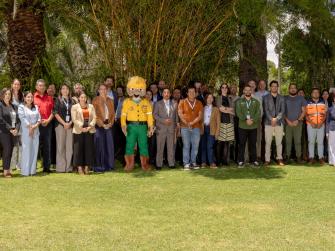
Convened in Quito, Ecuador, the workshop brings together governments, Indigenous leaders, scientists, and civil society representatives to address wildfires
The Environmental Defense Fund (EDF), in coordination with the Ministry of Environment and Energy of Ecuador (MAE) and in partnership with BirdLife International and the Global Wildfire Collective, today announced the opening of a three-day international workshop to review and assess the status of Amazonian countries in relation to the four pillars of the Wildfire Action Accelerator Pledge announced at COP30.
The pledge is a global initiative designed to strengthen how countries prevent, manage, and respond to increasingly severe wildfires, grounded in four core pillars: elevating traditional and Indigenous fire knowledge, scaling sustainable finance for prevention and early action, strengthening governance and policy integration, and advancing science, technology, and data systems to support more proactive and coordinated action.
The event brings together government officials, Indigenous leaders, scientists, and civil society representatives from across the Amazon basin to address wildfires, one of the region’s most urgent environmental crises. The event represents a strategic opportunity to strengthen regional and international coordination among technical, community, and political actors, align priorities, and promote a shared agenda for cooperation in addressing wildfires.
“In the face of the increasing number of forest fires, it is essential to strengthen prevention systems, early monitoring, and institutional coordination. This workshop offers a key opportunity to exchange experiences and knowledge among countries, and to advance joint technical solutions through South–South cooperation,” said Milton Ordoñez, Director of Forests, Ministry of Environment and Energy of Ecuador.
“Wildfires are not only an environmental issue; they are also a climate, social, and territorial challenge. Addressing them requires coordination at the same scale as the problem itself. The Wildfire Action Accelerator, together with Environmental Defense Fund’s leadership, is helping to open that path by creating spaces where diverse voices can come together to build shared solutions that are stronger, more inclusive, and more durable,” added Santiago García, PhD, Director of Forest Partnerships, EDF.
Why now?
Wildfires in the Amazon region have ceased to be seasonal events and have emerged as one of the major threats to vital forests that help stabilize the global climate. As highlighted by the IPCC – Sixth Assessment Report (AR6), the FAO – Fire Management and Climate Change, and the Spreading Like Wildfire report, fire regimes have intensified in frequency, scale, and unpredictability, exacerbating climate, environmental, and social risks.
Amazon wildfires were the dominant cause of 2024’s record-setting loss of 6.7 million hectares of tropical primary forests, those with the greatest biodiversity and ecosystem services values.
Over the past decade, fire scars in the Brazilian Amazon have covered an area larger than France – 62 million hectares. Current models project that the type of extreme events that led to a severe 2024-2025 fire season in South America will become more frequent (34-57%) by 2100, under medium-high climate change scenarios.
Four pillars of action
The Wildfire Action Accelerator Pledge promotes an international process structured around four pillars:
- Strengthening the leadership and traditional knowledge of Indigenous Peoples and Local Communities
- Mobilizing sustainable financing
- Integrating fire management into climate and forest policies
- Strengthening South–South and international cooperation through the identification of existing capacities, gaps, and the prioritization of strategic actions.
The workshop is conceived as a technical-political and practical space aimed at validating preliminary findings on the regional situation across the pledge’s pillars, assessing national capacities, and prioritizing strategic actions to accelerate responses to wildfires in tropical forest countries.
What the workshop will achieve
Over three days, the workshop will bring together government representatives, Indigenous Peoples and Local Communities, and technical partners in a structured, participatory process moving from assessment to action. Participants will collectively validate a regional diagnosis of current capacities across Amazonian countries against the Pledge's four pillars, establishing a shared, evidence-based understanding of strengths and gaps — then identify and prioritize strategic regional actions for the short and medium term based on impact, feasibility, and urgency.
The workshop will also:
- Address key technical, institutional, and financial needs as well as opportunities to mobilize resources
- Facilitate knowledge and experience exchange
- Explore tools, and emerging technologies to strengthen integrated fire management
Together, these efforts aim to produce a clear, actionable roadmap for coordinated wildfire prevention, preparedness, and response across the Amazon.
Concrete outputs will include a validated regional matrix organized by country and aligned with the Pledge's four pillars — capturing current capacities and gaps — along with a consolidated technical report synthesizing key findings, insights, and lessons from the discussions.
Building on this foundation, participants will develop a prioritized regional action plan that outlines practical steps for implementation in the short and medium term. The workshop will also produce a technical note identifying cooperation opportunities and potential funding pathways, helping to connect countries and partners with the resources needed to translate commitments into tangible results, that strengthen wildfire prevention efforts.
With more than 3 million members, Environmental Defense Fund creates transformational solutions to the most serious environmental problems. To do so, EDF links science, economics, law, and innovative private-sector partnerships to turn solutions into action. edf.org
Related Expert

Director, Forests Partnerships
Latest press releases
-
Pairing conservation and competitiveness leads to stronger American fisheries
October 26, 2026 -
Behind closed doors, Trump EPA worked with White House to help polluters avoid enforcement
October 26, 2026 -
Groups File Lawsuit Challenging Delay of Greenhouse Gas Reporting Program
October 23, 2026 -
Coming Soon: A Trump EPA proposal to weaken pollution limits for the turbines that power data centers
October 20, 2026 -
Delaying major IPCC report risks leaving global decision-makers in the dark
October 19, 2026 -
Oral argument in a lawsuit challenging unlawful delays of methane pollution limits
October 13, 2026