


Key takeaways:
- Climate change is making floods more extreme. Warmer air holds more moisture, fueling heavier rainfall in many places.
- Rising seas are driving more coastal flooding. Melting ice and expanding seawater push tides farther inland and make storm surges more destructive.
- Heat and drought add to flood risk. Hardened, dried-out soil struggles to absorb heavy rain — which can turn rainstorms into devastating floods.
- People are making floods more destructive. Destroying wetlands, building in flood zones and paving over nature all make floods more frequent and more damaging.
- We can lower flood risk by protecting wetlands and other natural flood barriers, improving flood mapping, smart community planning, and investing in the most at-risk communities.
Climate change is making flooding more likely.
Pollution from burning coal, oil and gas is warming the atmosphere, and warmer air holds more water vapor — making heavy rains more intense.
The Earth has already warmed over 1 degree Celsius since the late 1800s, and for every extra degree of warming, the atmosphere can hold about 7% more water vapor.
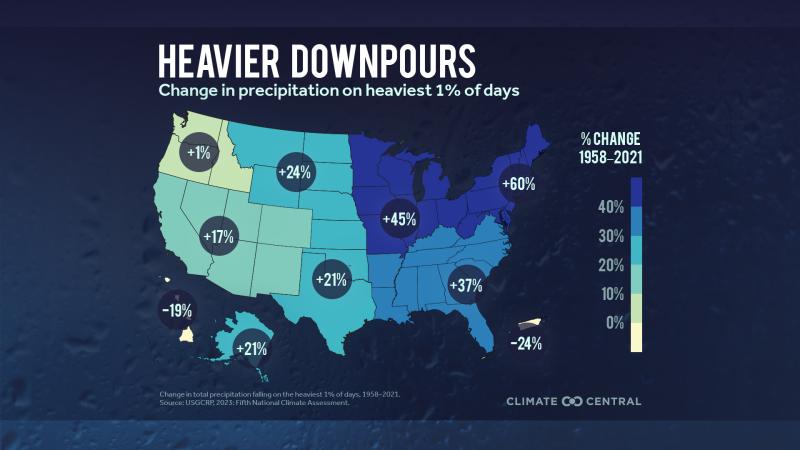
Climate change is also making heat waves and droughts longer, hotter and more frequent, which increases flood risk in certain regions.
Hotter conditions dry out the soil and kill plant cover, making it harder for the land to absorb water. When torrential rains land on dry, compacted soil, the water can’t soak in fast enough. That turns life-giving rains into devastating floods.
This kind of “weather whiplash” — swinging from one extreme weather event to another — is becoming increasingly common as the world warms, researchers say.
How does sea level rise make flooding more frequent?
Sea level rise is one factor driving more coastal flooding. Rising temperatures are melting ice sheets and glaciers, adding an influx of water into the world’s oceans, while seawater is also expanding as it warms. Both factors contribute to sea level rise.
Higher sea levels bring tides farther inland, and more frequent flooding to low-lying roads, homes and buildings. In fact, rising seas are causing more tidal floods — also known as “sunny day” flooding — in many coastal communities, notes the U.S. Geological Survey.
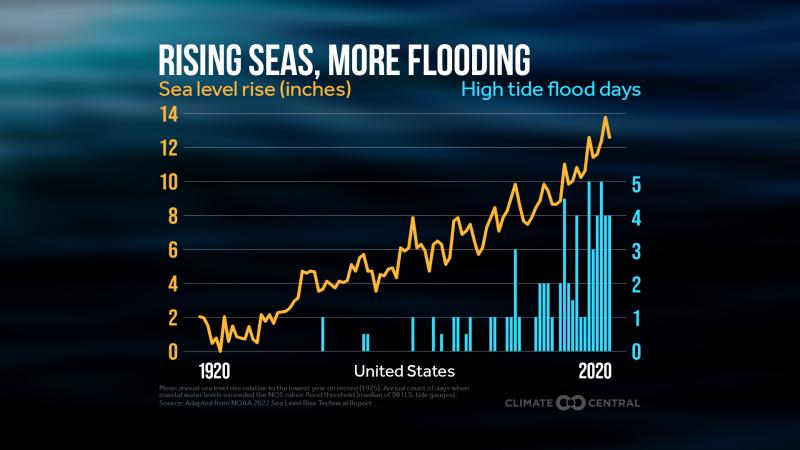
Rising seas also make tropical cyclones more destructive by increasing storm surges and worsening coastal flooding.
Why are floods affecting more people and places?
While climate change makes flooding more likely, people have made it worse by destroying wetlands, building and paving over nature, and constructing houses where flooding is more likely.
Marshes, swamps and other wetlands act as natural flood protection, quickly soaking up torrential rains. However, in many places a landowner can make more money by paving over a wetland for commercial development than by preserving it.
In the U.S., wetlands are increasingly in danger: A 2023 Supreme Court decision stripped millions of acres of wetlands of Clean Water Act protections, and in 2025, the Trump administration proposed further dismantling federal protections from 90% of all wetlands in the United States. When wetlands are allowed to disappear, rainstorms are more likely to turn into destructive floods.
What’s more, people continue to build housing in areas where flooding is likely. The rate of building in flood zones is increasing worldwide, according to a 2023 study in Nature.
It’s essential to make accurate, up-to-date flood-risk information widely available to help people avoid flood-prone areas — and provide more government planning and funding for community recovery when disaster strikes.
How is flood risk changing?
Flood risk to people is rising. According to research from NASA, the proportion of people across the globe living in flood-prone areas rose by 20 to 24% between 2000 and 2015 — 10 times greater than the number previous models had predicted.
A 2025 study in the journal Nature Communications further estimated that 1.9 billion people could be more exposed to devastating floods by 2100 because of population shifts and climate change.
How can we lower flood risk?
1. Push for flood risk disclosure and fair disaster recovery.
Everyone deserves to know the risk of flooding before they move into a home — but not every state requires disclosure. That’s why it’s important to look for solutions that give people the power and information needed to make informed decisions for their families.
Solutions include advocating for strong flood risk disclosure laws, which help inform buyers and renters of their flood risks before moving into a home, and identifying gaps and unequal access to disaster recovery support and insurance.
2. Urge community leaders to protect and restore nature.
From rural areas to agricultural lands to coastlines to people-packed cities, nature offers a variety of ways to give water somewhere else to go besides homes, businesses and farm fields.
Communities can look to nature for a variety of ways to lower flood risk, including:
- Protecting and rebuilding wetlands, which slow down, soak up and store heavy rains
- Combining natural landscapes (like wetlands or coastal dunes) with built structures (like levees or seawalls) — so-called "hybrid" flood defenses help protect communities from flooding while supporting local wildlife
- Designing cities with flooding in mind — more green spaces and less pavement help heavy rains soak into the ground, instead of turning into flash floods
3. Tell your representatives to prioritize flood resilience funding.
Flood resilience funding saves money and protects people’s lives. According to the U.S. Chamber of Commerce, every $1 spent on disaster preparedness saves communities up to $13 in future flood losses, and every $1 left uninvested can cost up to $33 in lost economic activity over the next decade.
Smart flood policy pays off, studies show:
- Steer development away from high flood-risk areas. A 2024 study in Nature Climate Change found that federal rules discouraging building in the riskiest coastal flood zones have reduced flood damage and saved the National Flood Insurance Program hundreds of millions of dollars a year.
- Protect wetlands as a flood defense. EDF research published in Nature Water in 2026 found that wetland loss has driven up U.S. residential flood insurance claims by $10.1 billion since 1985 — demonstrating that preserving wetlands is one of the most cost-effective flood protection investments a community can make.
- Prioritize the communities with the highest risk. Flooding isn't just a coastal problem: Every U.S. state and territory has filed flood insurance claims since 1980, according to FEMA. And the families most likely to face a devastating flood often have the fewest resources to prepare, evacuate or rebuild. Call on your representatives at the federal, state and local levels to make sure flood resilience funding reaches these families first.
4. Slow global warming and stabilize the climate.
While we fight deforestation and work for clean energy and transportation, we must also slash the pollution caused by methane, a greenhouse gas with more than 80 times the heating power of carbon dioxide for 20 years after its release.
EDF scientists have found that a rapid, full-scale effort to cut methane pollution could slow the speed of the planet’s warming by as much as 30% before midcentury.
Learn more about climate change and extreme weather
Frequently asked questions
Flash flooding is a flood that starts within six hours — and often within as little as three — after a heavy rainfall, according to the U.S. National Weather Service. Such rapidly developing floods pose a serious threat to life, property and infrastructure — often leading to road closures, property damage and potential evacuations. Climate change is making flash flooding more likely in many places.
Extreme flood risk means there's a very high likelihood of significant flooding in an area, with potentially severe impacts — from storm surges, rising rivers or overwhelmed drainage systems. Climate change is increasing extreme flood risk by intensifying heavy rainfall, raising sea levels and degrading natural flood barriers like wetlands.
A floodplain is a flat area of land next to a river, stream or coast that naturally floods. Floodplains act as buffers against heavy rain. Restoring and reconnecting floodplains is one of the best ways to reduce flooding.
Climate change increases flood risk by making the atmosphere hold more moisture, intensifying heavy rainfall and raising sea levels. It can also intensify heat waves and droughts in some regions, drying out soils and making landscapes less able to absorb rain.
As temperatures rise and ice caps, glaciers and ice sheets melt, sea levels rise — and coastal communities face increasing high-tide flooding. Higher seas also increase storm surge impacts, leading to more severe flooding after hurricanes and tropical storms.
Projections show most coastal U.S. cities will see a sharp increase in flooding at high tide by 2050 as sea levels rise. Low-lying communities along the Atlantic and Gulf coasts are especially vulnerable. Rather than a fixed list, flood risk depends on local elevation, stormwater infrastructure and how much we cut pollution that worsens climate change.
Climate change is driving more extreme rainfall, raising sea levels and changing soil conditions — all of which can increase flood risk. In many places, building housing in flood-prone areas is still allowed. When communities build and pave over rain-absorbing wetlands and rely on aging stormwater systems, the risk of damaging floods increases.
To reduce flood risk, people need better flood mapping, more restored and protected wetlands that naturally store rain, and smarter community planning that protects and supports the people facing the greatest flood risk with the fewest resources.
Maximize your impact to reduce pollution and safeguard our health
Give now to defend our planet:
Your gift can help reduce dangerous pollution
Give now to defend our planet: